A Little Fun – for a Change

I teach an engineering course at a local university –students in their last year learn about power system design, and I have loved the opportunity to work with these keen young minds.

After the final exam a few weeks ago, one of the students asked about what had changed since I was a student? I laughed and decided to tell a few bad tales…

On my first day – in first year engineering, back in 1963, I was in my first class – Geology 150. A loud bang on the door occurred and in marched 5 or 6 very tough looking 4th year engineering students… “Who has not bought an engineering sweater?” was the question… Thinking that it would be a good time to buy, I put up a hand. I was instantly grabbed by the biggest 4 of these “thugs,” hauled out and thrown head first into the lily pond outside. Soaked, I was dragged back in – and deposited on the bare cold floor in front of the class… “Anyone else not got a sweater yet??” The class was deadly silent. I left, changed, bought a sweater and came back to class. Lesson 1 learned – and not about geology.

A few weeks later, I attended one of our weekly noon meetings – all dressed in our red sweaters. During the summer, a few students had made some very ugly statues, complete with little bronze castings with “In memory of….” on each statue, and all of these monstrosities had been placed around the arts building. We marched out chanting – “do we like these…. NO!!!”… “what are we going to do…??” And we promptly smashed every one to bits. The two local papers were furious at the engineers… and even the TV networks referred to us as savages.. A few days later the truth came out. That was fun.

Later there were other stunts. A group stole the “Speakers Chair” from the provincial legislature, and the 9 PM Gun, an artifact in Vancouver that goes off every night at exactly 9 PM, disappeared. Both were returned unharmed after about a week.

But the stunt that provokes a lot of strange memories was done by a small group of engineers. They made a very large batch of good cookies – laced with an organic indicator, that they had been assured would not be harmful. The indicator turned red in an acid liquid.

One of the group put a desk in the lobby of the lecture theatre where arts students were to have a big meeting. They gave out cookies – a gift from the engineers. A few hours later, there was a long line of students at the university health centre, certain that they were all suffering from internal bleeding. It was quite outrageous. The chemistry professor that taught the students responsible for the stunt failed them all, for 2 or 3 years after. One that I knew and still see from time to time, had to give up on his engineering future, and became an architect. He is now retired.

My students laughed at me and told me that they would surely be jailed if they tried ANY of the stunts that we had thought were funny. And on reflection, they were probably correct. How intolerant have we become, and how much fun some of the stunts were. Most were aimed at situations, and care was taken not to target any individual or group..

There is a lesson here. Some of the worst “hell raisers” in my years as a student did well in their careers.  One became the head of a large oil company, and others did some remarkable work. These people had minds that could come up with “out of the box” ides, outrageous as they may have been. But I do think that more of this kind of thought is what is needed today. We need innovation, out of the box thought, and the ability to turn some crazy vision into a practical reality. Those were fun years.
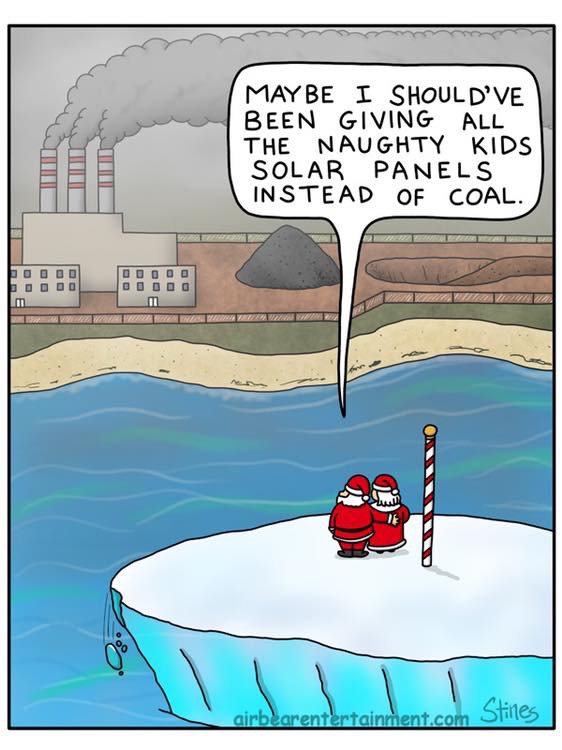
A Few Thoughts from an OLD Canadian Engineer on Climate Change and Energy

  1. I am not a climate denier – and in fact, it terrifies me. Even though I am well past retirement, I do continue to work on potential solutions and I am currently both a teacher and a student on this topic at a local university.
  2. We have 12 years to turn this around.
  3. There is a huge amount of bad information around – many people are “instant experts” believing that renewables can just do it all – in a few years!!!
  4. People like to blame the US, China and India for all the problems but in fact, Iceland uses more energy per capita than anywhere. Canada is worse than the US, and both China and India use a fraction of the annual energy per person that Canada and the US use. We need to look in the mirror before blaming others.
  5. Energy is delivered to customers either as electricity or as a form of fossil fuel (for the most part).
  6. Coal creates about DOUBLE the GHG emissions than created by Natural Gas – for the same heat content. Steam turbine generation (burning coal) for electricity is about 30% efficient.  Natural gas in a Combined Heat and Power plant can operate at better than 80% – with emissions that are a fraction of coal generation as it exists.
  7. Electricity delivers less than 20% of the total energy to customers in North America – to put all energy delivery on the electric grid is a huge challenge.
  8. Solar advocates love to claim that solar power has a large fraction of the supply CAPACITY, but these sources run for relatively short periods
  9. People seem to think that new battery technology will change everything…
    1. Batteries are great for day-night operation or for short outages. But summer to winter storage is another matter.
    2. I did a study on my own home. Most of the incoming solar comes between May and October.  Most consumption is between November and March (including heating).
    3. My home needs a 5 MWh battery – and at HALF of the projected price for 2025, that would cost me $250,000 US.  Not affordable for most people and not enough time.
  10. The major sources of GHG emissions in the US is Electricity generation and second is Transportation. The fleet of US personal vehicles uses more energy than the entire electric grid generates.  So much for the BC estimate of 8% increase in demand from 100% EVs.  (Don’t get me wrong – if the electricity supply is clean, EVs are the way of the future.  I own ONE car – an EV!
  11. Canadian Emissions come largely from Transportation and the Oil industry – this needs to be looked at.
  12. The potential for shared driverless cars is potentially one of the best changes that we can easily implement that would REDUCE user costs, REDUCE emissions, and provide reliable transport for everyone.
  13. We have a difficult problem ahead, but what is really needed is for all players (Utilities, solar producers, homeowners, industry etc.) to partner in finding a coordinated solution that is good for everyone. There is a role for everyone – and all can benefit, both financially and in protecting our planet.

Installing Solar – Consider adding battery storage

I saw a quote by James Avery, the Senior Vice-President of Power Supply at San Diego Gas and Electric (SDGE) suggesting that “until you couple solar with energy storage devices, it’s not going to be a benefit to the grid. This strong statement from a senior executive at a large utility may have more importance in cool climates than it has in Southern California.

I was recently talking with a heating service technician He believed that as soon as battery prices declined as expected, that there would be no need for utilities, and we would all be self-sufficient. We see a lot of governments pushing the concept of Zero Net Energy concept without explaining that they meant “Zero Net Energy Ready…”

By chance, I have been driving an Electric Vehicle (EV) for a little over one year, so my house gas and electric utility bills reflect the costs of typical electricity use as well as auto fuel and heating (I have both a heat pump and a high efficiency natural gas furnace. I also have a good quality Heat Recovery Ventilator.

I plotted the monthly energy use, and the incident monthly solar energy in my area, aiming to make the annual supply equal to the annual demand. The result was a surprise – as we get most of our solar energy between late spring and early fall but use most of our energy during winter months. The battery size for my modest home, to store summer energy for winter use was almost 5 MWh – a huge battery. If I assumed that the cost would fall from over $200/kWh to about $50/kWh, the cost at the low end would be almost $250,000 US to provide me with year-round energy, with no reserve capacity.

The quote by James Avery reveals another side of the issue. Utilities have generally charged residential customers for energy used in kWh. This is unlike the commercial and industrial customers that pay an additional “demand” charge for the peak power drawn. Utilities appear to be incurring real problems with their regulated residential rate structure, as solar is implemented. Much of the solar energy arrives in the afternoons, when the demand is relatively low, and there is little if any energy available from these sources after sunset, when most utilities see their daily peak demand. Total energy sales are declining as a result of the domestic solar supply, but the peak demand after sunset is continuing to grow. The grid design is based on peak demand, so there is a need for new capacity to meet a growing peak, but with revenue falling, there is a lack of funds to pay for the additions. Ultimately the residential rates are rising to meet the costs, and according to Mr Avery, the people without solar are paying to subsidize the ones that have installed solar systems.

The utilities are seeing other problems as well. The “duck curve” reveals that demand falls rapidly in the morning with the rising of the sun and rises equally rapidly at sunset. The afternoon increase is followed, almost immediately, with a rapid rise to the evening peak. Most conventional generators cannot meet the required change in demand over such short periods.  Some utilities are also seeing so much energy injected from solar sources into the grid in the afternoons, that they are forced to PAY other utilities to take it, only to have to buy it back, after sunset. In short, these utilities are paying three times for the same energy. They buy it from the home owner, pay a utility to take surplus, and pay again to get it back. There needs to be a better way.

Some utilities are seeking approval for a peak demand charge for residential users, and in one case that I spoke with, the company was looking at giving the energy to users at no charge but adding a large demand charge. The net utility revenue would then follow demand, but the addition of a solar system on a residence would likely deliver no savings at all. I know of another utility that has applied to withdraw a tariff that was used to purchase surplus solar from residential users.

If a demand charge is implemented for residential users, a solar user that does not have storage could find that the total cost of energy with the solar operating during the day would deliver little or no savings at all.

There are clearly two sides to this story; the utility is being put into a position that is financially unviable, while a home owner that wants to do what he believes is right is essentially caught in what could easily become a zero-sum game; one side wins, the other loses.

There needs to be a better way, and there probably is.

If one looks at most homes, the electric service is designed to deliver 30-50 kW of power, and yet, the average demand by residential users is about 1 kW. The change to electrify many fossil fuel loads is going to require much more energy to be delivered. The energy may come from central generation, or it may come from a wind turbine down the street. What is going to be important is efficiency as well as a means to utilize the full capacity of the grid to deliver energy. The existing transmission grid operates at an average of about 50% of its design capacity, providing the larger range to meet peak demand periods.

A home owner may want to install a battery with a new solar system, one that would allow them to collect energy during the daytime and use it to reduce their peak demand after sunset. Any utility demand charge would then be dramatically reduced. This could be a first step, but if the utility were allowed to control the charging of the battery, an option that they might pay for, then the benefits could be optimized for both the utility and the customer. Many utilities have demonstrated that they are very capable of high quality routine optimization of their operations.  Some utilities are already controlling domestic hot water heaters, heating water when there is low demand, but ensuring that the customer has hot water when needed. The same concept could easily be applied to EV chargers, storage on solar systems and multiple other domestic applications that have inherent storage.

There needs to be a paradigm shift, where home owners and utilities see each other as partners. Both sides can win by working together to optimize the total operation. That way, everyone can save, and emissions can decline significantly.

Hydro Storage – A Less Expensive Battery

I recently reviewed an EPRI document that discussed storage and by far the largest size storage systems were pumped storage plants.  I wondered why they did not include hydro (non-pumped) storage, as this form of storage is far larger than any other form of storage that is available on the grid now.

Parts of North America, but sadly not all of it, are blessed with mountainous territory that has many rivers and streams that run downhill, and many of these have been harnessed for electricity production. While not specifically intended as storage plants when built, the value of their storage may well turn out to be larger than the value of the electricity that they may produce.

Consider a hydro dam that is 35 M in height with a reservoir that is 10 km2. Discharging the top 1 M of water through a generating station (90% efficient) would release almost 840 MWh of stored energy.

This is a small hydro plant, with a small reservoir behind it, yet the storage is almost 840 MWh/M of depth that is drawn from the forebay.  That is in addition to the electrical energy generated for use.

So how does a utility that has no pumps manage to store and return energy?  The process is both simple and efficient.  Hydro plants generally have the capability to be started and stopped quickly. They can change load rapidly and are generally a flexible resource.

A utility that supplies power to many customers, that has hydro capacity potentially has capability to take power from others that is actually not stored but is used to power their own loads.  At the same time, the capacity at the hydro plant is reduced by the amount of the import, and the lake behind the dam slowly fills. In the example above, an import of about 840 MWh would result in an increase in the lake level of about 1 M.

When the time comes to return the storage, the utility simply generates more power than they need for their own load, and the 840 MWh that was stored by the plant is returned.  One real benefit of this process is the efficiency; rather than pumping water uphill and generating when it comes down, at an efficiency that is generally less than 70%, this process is simply “moving” the time at which the energy is generated. It is essentially 100% efficient, with a small increase in line loss as a result of the need to carry more power at peak periods.

This example plant is very small.  Several Canadian utilities have very large plants, some that are more than 200 M in height and have reservoirs that cover up to more than 1,500 km2.  The BC Hydro dam at Hudson’s Hope has a forebay area of 1,761 km2, and that lake can be drawn down by more than 35 M, resulting in storage capacity of more than 20,000,000 MWh.

By comparison, batteries currently cost more than $200/kWh and are expected to fall significantly in the next 10 years. A battery cost of $60/kWh to replace the Hudson’s Hope storage would cost more than $1400 Billion. These facilities were created to generate electrical energy; the storage is a bonus.

If renewables are to work efficiently, we are going to need a significant level of cooperation between utilities that have large storage capacity and the renewable energy sources.  I understand that at present, California is paying rooftop solar generators a high price for their energy, only to find that they have a surplus that they are paying companies with the flexibility to take it, and then after dark, they  well may need to be able to purchase the energy back to meet a growing peak demand. They are paying three times for the same kWh. Surely this is not optimal